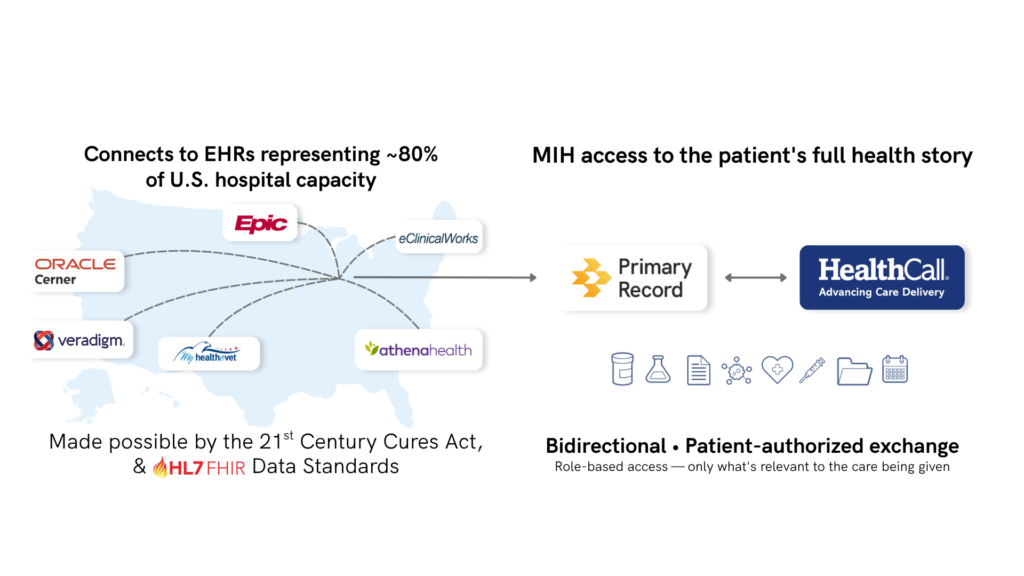


At Primary Record, we occasionally come across the misconception that we are in direct competition with large electronic health record (EHR) companies like Oracle (formerly known as Cerner) and Epic. A recent Indiana Business Journal article mentioned that our company’s biggest challenge could be “going up against large EHR vendors” and their dominant market share. We understand this viewpoint but believe it’s important to highlight the fundamental differences in our roles and the legislative landscape that supports our mission.
Understanding the Legislation: The 21st Century Cures Act
A pivotal point to understand is the 21st Century Cures Act, which empowers patients by guaranteeing their right to electronic access to their health information. This law mandates that information networks and vendors, including the so-called “big dog” EHR companies, provide patients with access to their electronic health data. Failure to comply with these requirements can result in substantial penalties, including fines of up to $1 million for information blocking.
The 21st Century Cures Act is a game-changer. It ensures patients are no longer at the mercy of EHR systems to access their health data. Instead, it places the control firmly in the hands of patients, making health information more accessible and transparent. By December 31, 2024, all certified health IT developers must publish the web address that patients can use to connect to their electronic health records through an app and related organization details in a standardized FHIR® format per the 21st Century Cures Act (§ 170.315(g)(10)). This allows patients to access their electronic health information securely. You can learn more about the impact on patient access here.
Primary Record’s Role: Use Patient Access for Better Care
Primary Record is designed to add significant value to the patient experience by providing a comprehensive, family-friendly mobile health application. Our goal is to help families manage and use their health data effectively rather than competing with EHR systems. Here’s how we add value:
- Collect in One Place: Primary Record allows families to download multiple patient portals from different sources into one view. They can also edit or add information for a more comprehensive understanding.
- Organize to Summarize in Reports: We help families create reports to share with their healthcare team. Designed by doctors and nurses, these reports provide a useful summary to guide the care plan.
- Versatile Data Management: Primary Record supports uploading audio files, PDFs, and images. We leverage advanced technology to extract text from these documents, making them searchable and easy to summarize. This feature acknowledges that families still receive valuable health information on paper and during appointments.
- Secure Sharing & Transparency: We prioritize security and control, allowing families to decide who can access their health information. Transparency is essential in Primary Record, with an activity feed showing who has viewed, added, or changed information about a profile.
- Innovative Health Insights: Currently in beta, our large language model assists families by answering health-related questions using the information they have collected and organized. This facilitates a better understanding of health and promotes shared responsibility among family members caring for a child or older adult.
The Future of Healthcare: Collaboration, Not Competition
At Primary Record, we believe that the future of healthcare lies in collaboration, not competition. We complement the existing healthcare infrastructure by ensuring patients have easy access to their health information and providing tools to manage and use this data effectively rather than competing against it.
Our goal is to become the most trusted and referred mobile health application for families among health professionals, filling a critical gap in the market. We are committed to empowering patients with the tools and information they need to take control of their health, ultimately enhancing the patient experience and improving healthcare outcomes.
In conclusion, Primary Record is not challenging the EHR giants; we are embracing a long-overdue opportunity to enhance patient care through better access and management of health data. The 21st Century Cures Act ensures that this data is accessible, and we are here to ensure it is usable, secure, and trusted.