

The Centers for Medicare & Medicaid Services (CMS) have approved over 400 organizations as testing grounds for a new model of dementia care and family caregiver support called Guiding an Improved Dementia Experience (GUIDE) Model. As of July 1, 2024, these established businesses offer comprehensive care management and support programs for individuals diagnosed with dementia and their caregivers. Below is an updated tool to help families find participating GUIDE Model programs across the United States, including their legal business name, program name (if applicable), address, city, and website links. You can learn more about the GUIDE Model here.
Find GUIDE Model dementia care support near you — or virtually, anywhere in the U.S.
The GUIDE Model connects people living with dementia and their family caregivers to a dedicated care navigator, 24/7 support line, and respite services, at no extra cost under Medicare. Pick your state below to see programs with a local office and programs offering telehealth coverage in your state.
Do you have Original Medicare?
GUIDE is for people with Original (Traditional) Medicare, not Medicare Advantage. Not sure which you have? Here are two easy ways to check:
- Call Medicare at 1-800-MEDICARE (1-800-633-4227). They can tell you what coverage you have.
- Look at your cards. If you use the red, white, and blue Medicare card at the doctor, you likely have Original Medicare. If you use a card from a private insurance company, you may have a Medicare Advantage plan. You can also log in to your account on Medicare.gov or your insurance company’s website.
You can use these same steps to check your drug coverage (Part D) or supplemental coverage (Medigap).
3 questions to ask when you call
- When I call your 24/7 line in the middle of the night, who answers, and what can they do?
- Who will be my main contact, and how often will we hear from them?
- What kind of respite care do you actually provide, and how soon could we start using it?
How This GUIDE Model Directory Was Built
This tool was built from CMS’s official GUIDE Model Participant List, using Claude to clean, organize, and structure the raw spreadsheet into a searchable format. It sorts programs by state, distinguishing in-person offices from virtual/telehealth coverage, and consolidating organizations with multiple office locations into single entries. We reviewed it for accuracy before publishing, but with 450+ listings pulled from a government spreadsheet, errors are possible: a phone number could be outdated, a state might be miscategorized, or a listing might be missing entirely. Please contact us with any questions or edits.
This also reflects CMS’s list at a point in time. CMS updates that list periodically as organizations leave the model or adjust the states they serve, so treat this as a strong starting point rather than a live feed. CMS’s own mapping tool is the most current source straight from CMS.
Primary Record built this resource for Daughterhood to make CMS’s list easier for families to use, as they can use Primary Record to bring together key information to help them qualify.
How to Use This Tool to Find a Program
Search by state above to find a program’s phone number, website, or email. This includes both in-person offices and virtual/telehealth options that reach your state. Because CMS selected all GUIDE participants through a single application window in 2024 and closed enrollment for the model’s eight-year run, the challenge now isn’t tracking new entrants. It’s raising awareness of this program to families and clinicians so they know about it, then helping them find which of the existing 450+ organizations actually reaches you.
Please verify before you rely on this, especially for time-sensitive care decisions. Confirm any program’s details directly by phone or on their website. If a link is broken, something looks wrong, or you know of a GUIDE participant we’re missing, let us know, and we’ll fix it.
For general questions about the GUIDE Model, visit the CMS GUIDE Model Overview or call 1-800-MEDICARE. If you need a community that understands the challenges you are facing as a daughter or caregiver, check out Daughterhood Circles.
For more on how the GUIDE model works, see our Understanding Medicare’s GUIDE Model.
Once You Find a Program, Keep Your Story Straight
Finding a GUIDE program is the first step. The next challenge is that every new team you add, whether a care navigator, a neurologist, or a respite provider, usually keeps its own records, and those systems rarely talk to each other. You may be used to seeing everything in one place in a patient portal like MyChart, but GUIDE programs often don’t have one to offer. That can leave you repeating the same diagnosis, medication list, and history on every call.
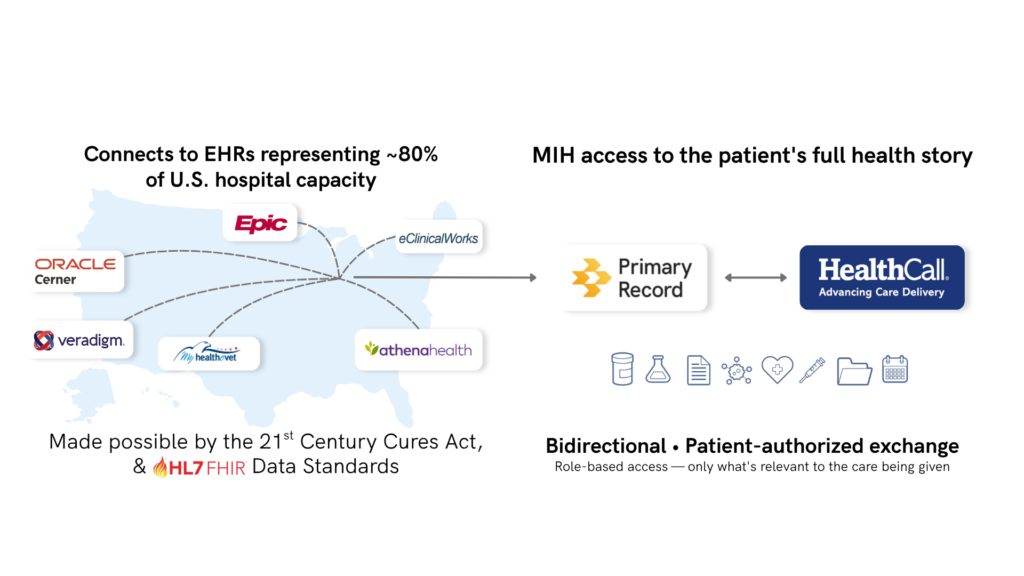
Primary Record helps caregivers bring that information together. With the patient’s permission, you can pull records from their different providers into one place, keep them organized, and share what each new team needs, so you aren’t the only one holding the whole picture. Think of it as a portal that follows your family member, not a single health system.
Learn more about Primary Record for families
For GUIDE programs: if your team needs patient information but doesn’t have a portal or a way to receive records from other providers, Primary Record can help. Patients and caregivers authorize and share the information, and we’re building ways for programs to receive it directly. Contact us to learn more.