
Recent regulatory shifts have created federal laws for patients and their families to access more detailed releases of their medical data electronically. Lack of knowledge regarding personal health data has contributed to the loss of continuity of care, inconsistent care plan compliance, incomplete patient history disclosure to new or acute care providers, and difficulty transitioning medical decision-making power to family members. Increased availability of health data and technology can transform how family caregivers provide care and enhance the overall caregiving experience. Primary Record is a technology startup created by a dynamic team with healthcare and caregiving experience from both a professional and personal approach. Primary Record is an app developed for families by families and aims to simplify the management of health information for families.
My Personal Story with Primary Record
As the 2023 spring semester Primary Record intern, I personally understood their mission. Growing up in a multigenerational household, watching my mother care for various family members, I was inspired to become a nurse. Though I have been clinically trained for more than six years, navigating the healthcare system regarding loved ones has not been challenge free. To trial Primary Record for my family, I encountered an obstacle families face in patient portal access.
Out of the three family members I tried to enroll in patient portals, two were unsuccessful, and they happened to be those for whom we need it the most. This highlights family caregivers’ barriers to care coordination for their loved ones, especially across multidisciplinary teams. With the aging population happening in our communities, I found it alarming that even organizations with great reach and missions to help Medicare populations continue to fall short concerning patient or caregiver access to personal health data. During my internship with Primary Record, I had the opportunity to conduct surveys and one-on-one in-person interviews, which confirmed my family’s experiences are not uncommon.
Problem
According to the Census Bureau, there will be more senior citizens aged 65 and up than children in the US by 2030 (US Census Bureau 2018). These projections warrant questioning whether the healthcare system as we know it is prepared for such demand. This, along with recent shifts in methods of healthcare delivery, has led to the increased incidence of family members assuming the role of caregiver for their loved ones. Oftentimes, the transition is unplanned and sudden.
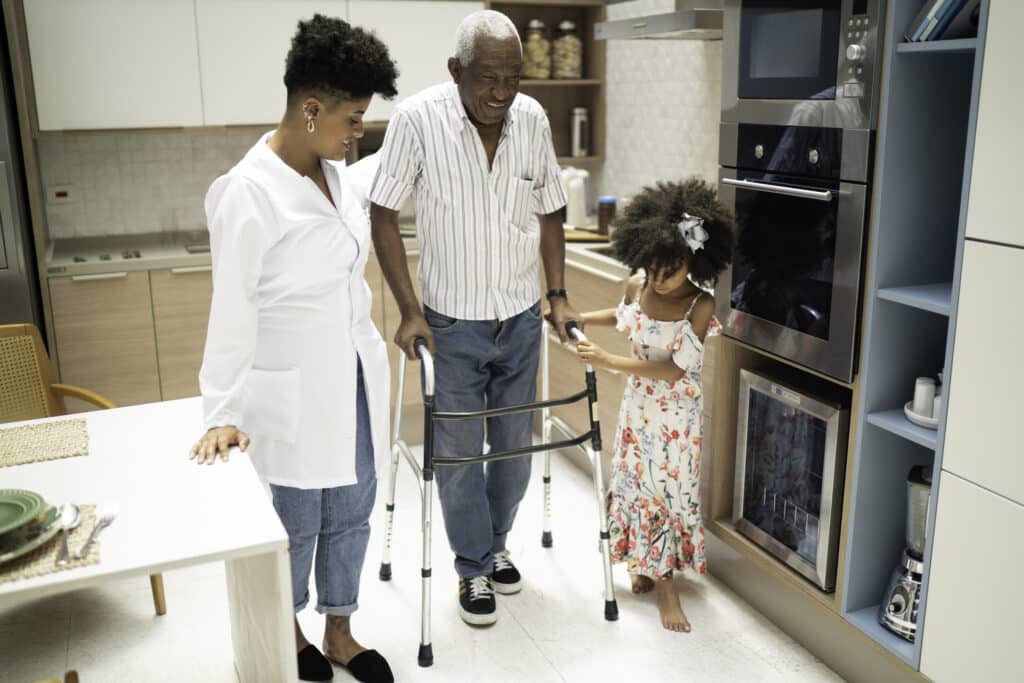
Family caregivers face many challenges relative to their loved ones’ care while juggling daily responsibilities such as work and childrearing. There are many instances where caregivers have no foundational knowledge of their family member’s medical history. When needed most, caregivers often face limitations in accessing their family member’s health information and face cumbersome steps to obtain electronic information via their family member’s patient portals. Family caregivers seldom receive adequate training or resources to gain the necessary skills to provide standard care, to effectively communicate with many healthcare providers, and to advocate for their loved ones. This can lead to frustration, stress, and mental health decline.
I’m doing the best I can with what I have. I am only one person and I wear many hats with limited support. It’s hard to keep everything straight when caring for three adults and a small child [not including myself]. I could use some guidance; I could use some help.Anonymous 52-year-old full-time caregiver of multiple family members & foster parent
Easily accessible, secure, and effective health data management for family caregivers can have significant benefits for both caregivers and the health of their family members. Another daughter caring for a mother in assisted living who was navigating wound care stated:
Sometimes it is hard to understand what is going on with my mother, so I ask my sister-in-law, who is a nurse, to explain. This is sometimes difficult because I’m unfamiliar with all the healthcare jargon, and I don’t know the answers to some of the questions the doctors or my sister-in-law ask. I have to try to remember everything to tell my siblings, hope I get it right, and try to answer their questions. Then when I take my mother to an appointment, there is usually something I forget to mention or ask. It’d be much simpler if we could all access the same information with notes and reminders.
Anonymous 60-year-old caregiver for her parent with dementia
Conclusion
Transforming how we access and organize health data will be critical for the growing number of families like mine. With the help of Primary Record’s mobile app, families now have one place to securely access and share their health data while ensuring that all care team members are on the same page. Primary Record’s mission to simplify health information for families will empower individuals, families, and their care teams with accessible, accurate, and secure health data to improve health.