
Who is the Sandwich Generation?
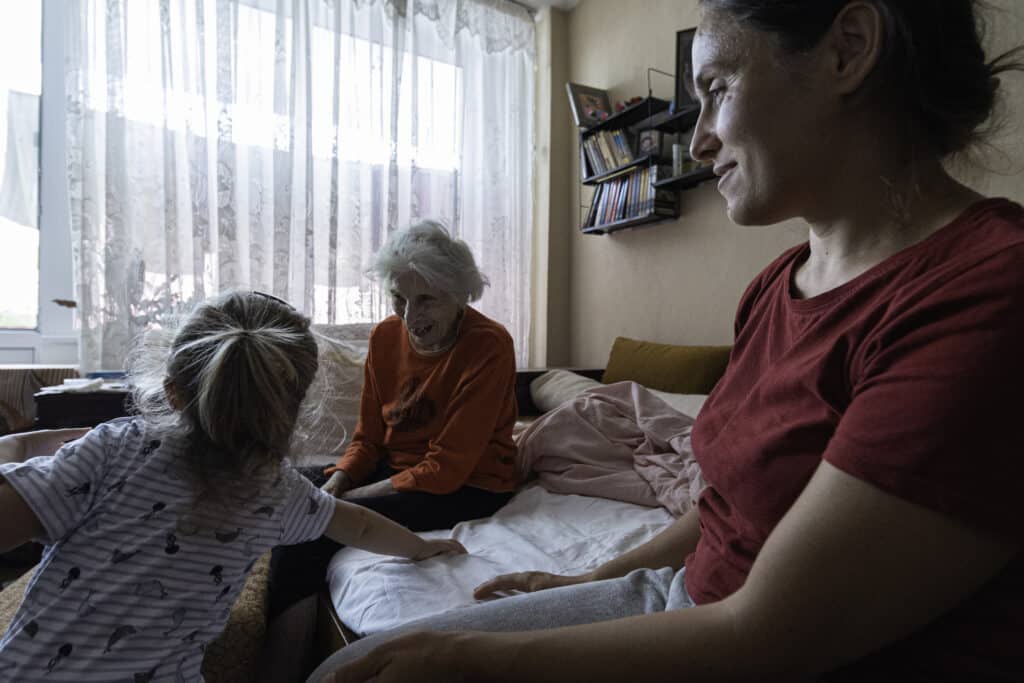
In 1981, two social workers, Dorothy Miller & Elaine Brody, identified a growing phenomenon they called “the sandwich generation.” Their research identified the growing stress of middle-aged adults who supported aging parents, children, and grandchildren in the community. Today, three types of “Sandwiches” have emerged:
- The Original Sandwich Generation: A middle-aged adult taking on aging parents’ care and living situation while caring for children at home or children transitioning away from home.
- The Club Sandwich Generation: A middle-aged adult who is like the original but has the additional layer of supporting the childcare needs of their working adult children who have children.
- The Open-Faced Sandwich: A group of professionals, agencies, friends, and neighbors who take on the legal or informal care to support a growing number of solo-agers, as identified by AARP, while also identifying with the Club or Original Sandwich.
The experience of the Sandwich Generation has been important to understand as this phenomenon impacts individuals’ productivity and presence at work, their ability to retire, as well as their mental & physical health. In understanding the stress faced within the Sandwich Generation, Primary Record focused on unnecessary stress felt when managing the health of young and old family members.
The Unnecessary Stress of Health Information
In talking with families at Primary Record, one family member tends to take on the role of family “administrator” or organizer regarding the family’s health. Family administrators spoke about the time, frustration, and stress of being the only one who could be present at appointments because they were the keeper of the health story.
What family organizers realize is there is no magical place that can care for the 72-year-old parent with dementia, the 48-year-old spouse with cancer, and the 5-year-old’s asthma and autism under one roof. Different insurance plans’ rules are another hurdle forcing many households to have differing in-network hospitals, specialists, pharmacies, and lab services. The most stressful aspect of the family organizer is realizing health information does not follow your family member between places of places.
Today, family administrators create medical binders to manage the stress of health information not being shared.
Primary Record’s Mission to Simplify Health Information
At Primary Record, the mission of simplifying health information for families led to focusing first on the experience of the Sandwich Generation. This is why starting a Primary Record means a family administrator can:
- Define their family by creating medical profiles for the individuals in their care.
- Invite other trusted family, friends, and professionals as editors to help support keeping the health story up to date for each family member.
- Share health information by simply assigning view access to those supporting the family administrator.
- Securely and quickly collect health information by connecting to the health data stored in multiple patient portals for each family member.
- Add notes and additional information to have one place family can fill in the gaps from patient portals of who, what, and why.
Primary Record believes the Sandwich Generation deserves a medical homebase where a family can have one secure place to keep their family members and care team on the same page.
Conclusion
In conclusion, the Sandwich Generation is a growing phenomenon as the Baby Boomers age and survival rates from disease and trauma increase. Primary Record has developed an application to simplify health information for families to ease the burdens felt when managing the health of young and old family members. By creating a medical homebase for families, Primary Record is reducing the unnecessary stress on the Sandwich Generation and the many other ways family is defined today.