
I have spent my career on the wrong side of the EHR.
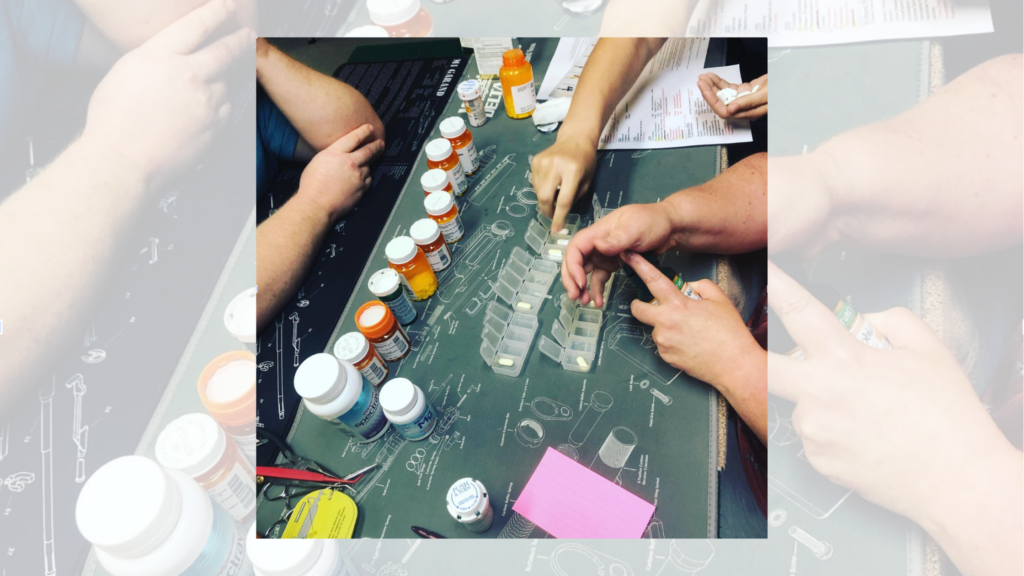
Not wrong in the sense of being mistaken, wrong in the sense of being outside. As a nurse care coordinator, I sat with patients and families in living rooms and care facilities, watching them pull crumpled discharge summaries from overstuffed binders, recite medication lists from memory, and apologize to providers for not having “the paperwork.” Meanwhile, somewhere inside a hospital system, their complete clinical history sat perfectly organized in a certified electronic health record, inaccessible to the very people who needed it most.
That experience is why Primary Record exists. And it’s why winning the 2025 AMIA HL7 FHIR App Competition and the recognition that follows mean so much to our team.
The Last Mile Problem in Healthcare Data
Health systems have made extraordinary progress in provider-to-provider interoperability over the past decade. Hospitals can share records with other hospitals. Specialists can pull data from primary care systems. Electronic Health Records (EHRs) talk to each other in ways that would have seemed impossible ten years ago.
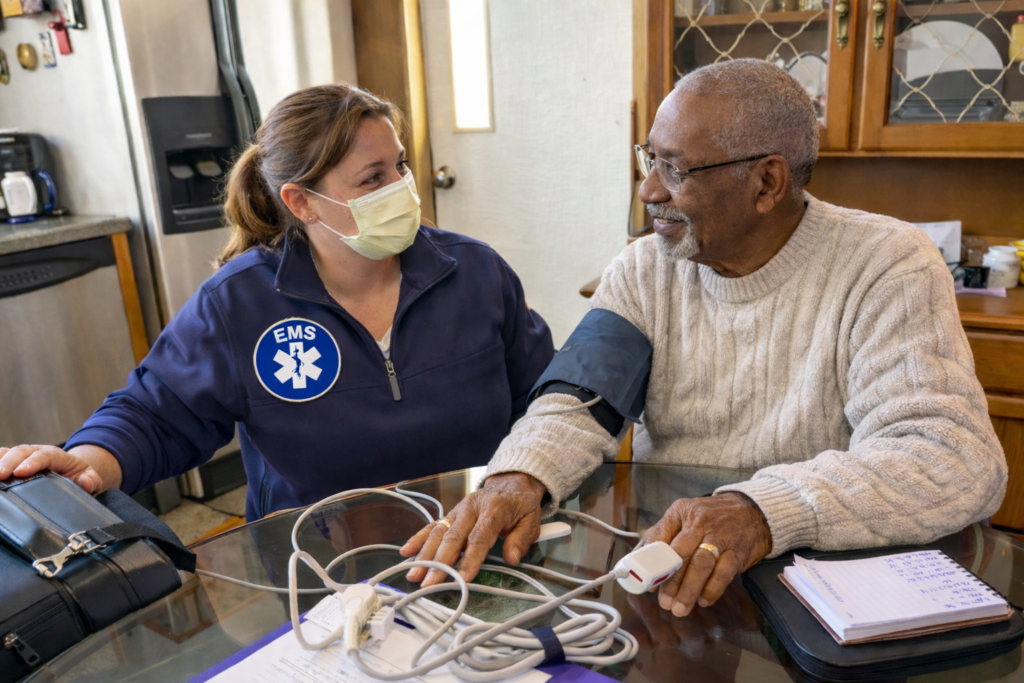
But here’s what hasn’t changed: outside the clinical environment, families, caregivers, EMS teams, school nurses, home health workers, and community organizations still coordinate care through phone calls, fax machines, and handwritten notes. A community paramedic arriving at a patient’s home still can’t see the patient’s medication list without interns manually copying data from an Epic portal. A rural nurse practitioner managing five home health agencies and a hospital system with five separate logins is still the human integration layer holding everything together.
I work in rural care where nothing connects. My clinic, the hospital, another hospital, and five home care agencies all run on different systems, each with its own login. I’m the one stitching it all together.
Sarah D., APRN — Rural Primary Care Provider & Co-founder, Gravity Project
This is the last mile of care coordination, and it’s where health outcomes are actually determined.
What FHIR Makes Possible (And What It Still Doesn’t)
Here’s the hopeful part: the technical foundation to solve this problem already exists. Using HL7 FHIR for patient access, now mandated for certified health IT systems under federal information blocking rules, gives patients the legal right and the technical mechanism to retrieve their own electronic clinical data directly from patient portals. Medications, encounters, lab results, conditions, allergies, immunizations: all of it available in a standardized, machine-readable format.
Primary Record was built on exactly this foundation. Using FHIR, we aggregate clinical data from existing patient portals and connected data sources, without requiring any new EHR deployments, custom integrations, or health system buy-in. We then organize that data alongside the lived context that clinical records never capture: over-the-counter medications, home vitals, caregiver observations, discharge instructions, legal documents, and the kind of daily care notes that families keep in spiral notebooks and backpacks full of paper.
HL7 FHIR gives us the foundation to connect families, clinicians, and community care teams without forcing them into the same system.— Jim McIntosh, Co-founder, Primary Record
But FHIR connectivity alone doesn’t solve fragmentation. Access without participation is what keeps care fragmented. The community paramedicine director who hires three student interns to copy-paste out of an Epic portal isn’t failing at technology adoption; they’re navigating a system that was never designed to include them. The data flows end at the hospital wall.
Our work is to push past that wall.
What Real Adoption Looks Like
We often hear that patients won’t engage with their health data. That families don’t want to manage medical records. That community-based care teams aren’t “tech-savvy enough” for interoperability tools.
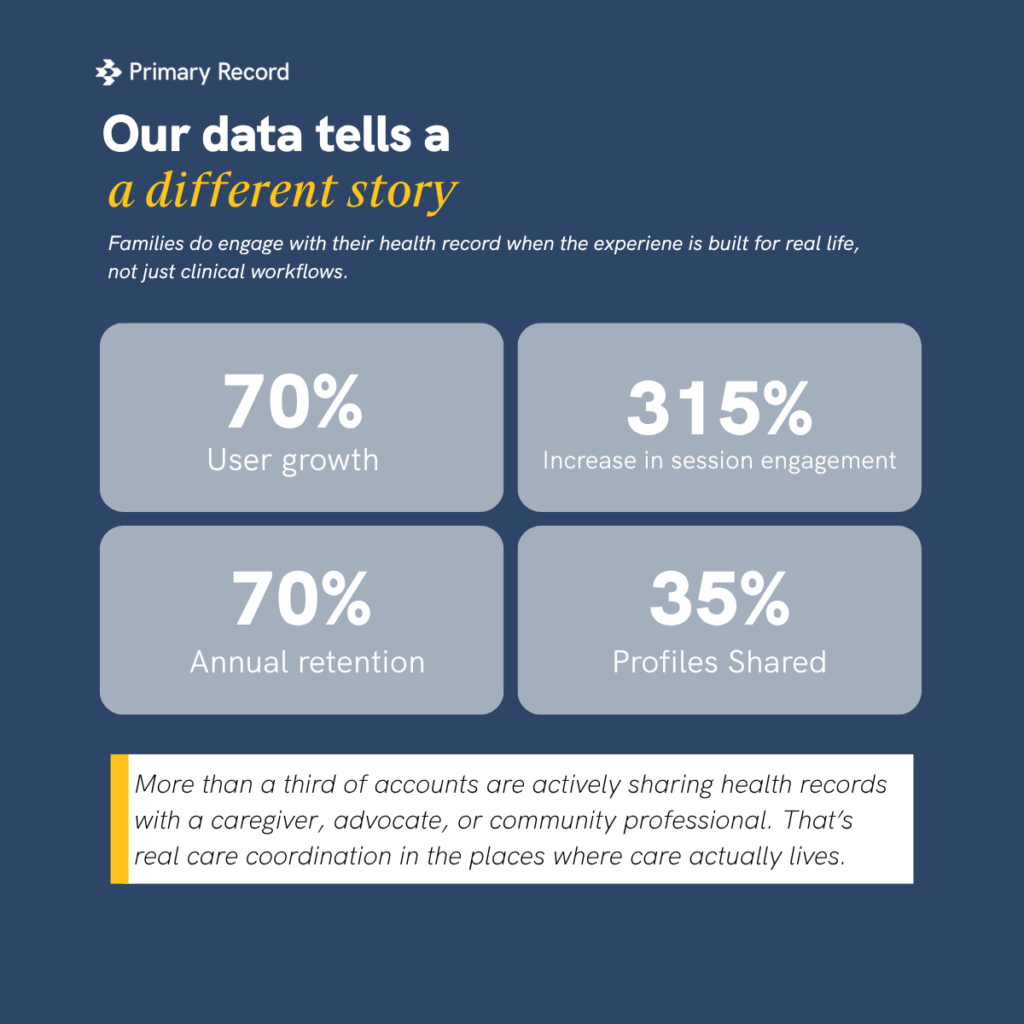
That last number deserves some attention. More than a third of users are actively sharing their health records with someone else, a family member, a paramedic, a home health worker, a care advocate. That’s not a patient portal metric. That’s care coordination happening. In the real world. In the places where care actually lives.
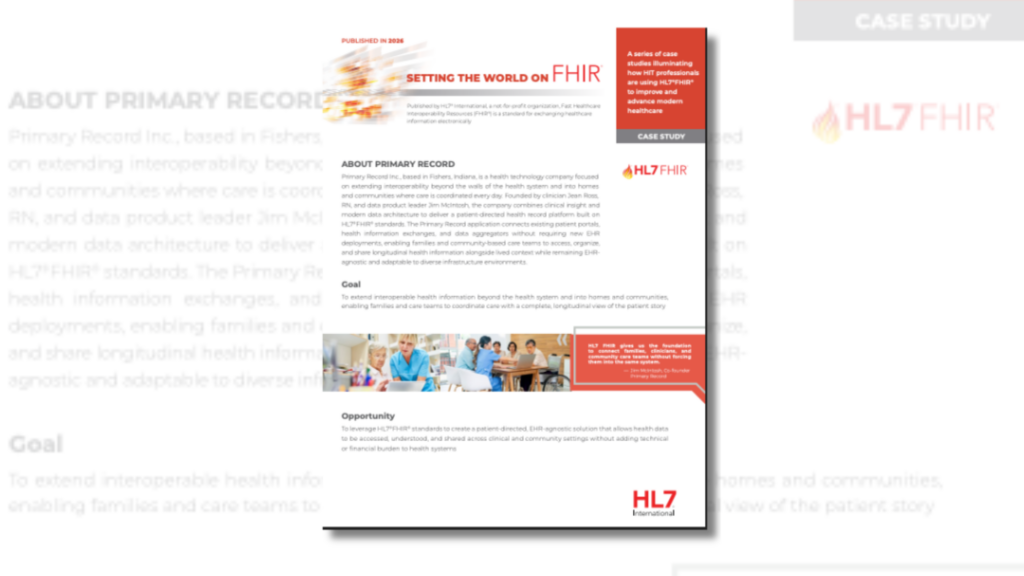
We were also deeply honored to be named the first-place winner of the 2025 AMIA HL7 FHIR App Competition, recognition that set off a remarkable sequence: being featured in HL7’s 2026 “Setting the World on FHIR” case study series, presenting at a panel at ViVE, and being invited to lead an HL7 Member Advantage webinar. That’s a lot of credibility earned from a community that understands the technical complexity beneath what looks to users like a simple experience.
What We’ve Learned from the People Actually Coordinating Care
Abstract principles become real when you see them working with the people doing this work every day. Our clearest signal of what’s possible has come not from large institutional pilots, but from private patient advocates and care managers working directly with families, the Kristy Shells of the world, sitting across the kitchen table from a family that has eight portal logins and zero coherent picture of what’s happening with their family member’s health.
These are professionals who have built entire workarounds to compensate for fragmented data. They maintain their own tracking spreadsheets. They spend hours each week logging into systems on behalf of clients to manually extract information that should flow automatically. They are, in the truest sense, human integration layers, and they are exhausted by it.
What we’ve seen when they use Primary Record is a shift from data retrieval to actual care work. When records are already organized and up to date, a care manager can focus on clinical judgment, family communication, and care planning rather than hunting down discharge summaries. That’s the ROI that matters. And it’s the proof of concept we’re now carrying into conversations with mobile integrated health (MIH) programs, rural health transformation grantees, and community-based organizations that face the exact same fragmentation at scale.
The question we’re pressing on now, and one we put directly to the HL7 community at our March 2026 panel, is how FHIR can evolve to formally represent these community actors. How do we represent trusted care coordinators who aren’t part of clinical systems? Should they be able to contribute data, or only consume it? How do we model authority when the patient, caregiver, and clinician each hold different versions of truth?
These aren’t rhetorical questions. They’re the next frontier of interoperability work.
A Note on HL7 International: What This Recognition Means
HL7 is not a vendor. It’s not a government agency. It’s a volunteer-driven, not-for-profit standards organization that has spent decades doing the unsexy but essential work of getting thousands of healthcare stakeholders to agree on how data should be structured and shared…worldwide. Without HL7 and FHIR, there is no standard to support patient access mandates. There is no interoperability ecosystem. There are no APIs for us to build on.
As a nurse, I came to this work from the bedside, from watching what happens when information doesn’t move. HL7 created the standards that make movement possible. What strikes me most about the HL7 community is that it is genuinely full of people who believe that getting this right will save lives. Being welcomed into that conversation as a nurse-founded company building at the community edge of interoperability is one of the honors of my professional life.
What Comes Next
When health information moves with people, communities are better able to support care beyond the walls of the health system. That idea, simple to say, hard to build, is what drives everything we do.
The technology is ready. The standards exist. The demand is real and growing. What’s needed now is the willingness to extend the interoperability conversation beyond the institution to include the paramedic making home visits, the adult child managing a parent’s care from out of state, and the community health worker who is often the only consistent touchpoint a patient has.
These are the people holding care together today. They deserve to be part of the infrastructure, not an afterthought.
If you’re a care manager, patient advocate, rural health program, or community team where patients move between worlds that don’t talk to each other, we’d love to hear your stories.